There is a moment every sublimation crafter has. You press something, peel the paper back, and the design just wipes off with your thumb.
That is not your printer. That is not your press. That is the blank.
Sublimation only works on surfaces that have been coated to receive it, and the coating is invisible. Two mugs can look identical on a shelf and only one of them will hold a design. That is what makes buying blanks so frustrating when you are starting out, and it is why I wrote this.
Below is what I actually buy after years of testing, what I would skip, and the one blank that taught me an expensive lesson.
This post contains affiliate links. If you buy through them, I may earn a small commission at no extra cost to you.
Quick Answer
If you are buying your first blanks, start with 11 oz ceramic mugs and hard-surface coasters. They are cheap, they fit every press, they forgive small mistakes, and they sell. Skip anything fabric until you have your settings dialed in, and skip anything unbranded from a marketplace listing that does not say the word sublimation anywhere in the description.
Quick Links
- What Makes a Blank a Sublimation Blank
- How I Test Blanks Before I Trust Them
- Sublimation Blanks at a Glance
- Mugs
- Tumblers
- Shirts and Apparel
- Coasters
- Wood Photo Blocks
- Ornaments
- Pillowcases
- Novelty and Sports Blanks
- Where I Buy Sublimation Blanks
- What I Would Skip
- Frequently Asked Questions
What Makes a Blank a Sublimation Blank
Sublimation ink does not sit on top of a surface the way vinyl does. Under heat it turns into a gas and bonds into a polyester or polymer coating. No coating, nothing to bond to.
That means three things in practice.
Hard surfaces need a sprayed or baked polymer coating. Mugs, coasters, slate, metal and wood blanks are all manufactured with it. You cannot add it convincingly at home, and coating sprays leave a shiny, textured patch that looks exactly like what it is.
Fabric needs polyester content. The higher the polyester percentage, the brighter and more permanent the result. At 100% polyester you get full colour. Around 65% you get a softer, slightly faded look that a lot of people actually prefer. At 100% cotton you get almost nothing, though there is a way around that which I will come back to.
White and light colours only. Sublimation printers do not print white ink. Anywhere your design is white, the blank shows through. On a navy blank, white becomes navy.

How I Test Blanks Before I Trust Them
I learned this the expensive way, and not with sublimation.
I bought a cheap flask from a marketplace listing that said leather wrapped. It photographed beautifully. It was not leather, it was bonded vinyl over metal, and it did not take the design at all. If that had gone out as a customer order instead of a test, I would have found out from the customer.
So now I buy one of anything new before I buy twelve.
Order a single unit first. Never open a case of thirty-six on the strength of a product photo.
Press it exactly the way you plan to sell it. Same time, same temperature, same press.
Then abuse it. Rub it hard with your thumb. Run it through the dishwasher. Wash the shirt. A design that survives the press but not the sink is worse than one that fails immediately, because you will not find out until it is already someone's gift.
Check the listing language. Real blanks say sublimation somewhere. Listings that only say “glossy white” or “printable” are usually neither.
I wrote about the flask in more detail in why you should always test blanks before selling, because the lesson applies well beyond sublimation.
Sublimation Blanks at a Glance
| Blank | Best for | Watch out for | Difficulty |
|---|---|---|---|
| Ceramic mugs | Gifts, first projects, steady sellers | Size vs press fit | Easy |
| Hard coasters | Photo detail, fast batches | Cheap uncoated lookalikes | Easy |
| Fabric coasters | Text and logos | Photos look softer | Easy |
| Wood photo blocks | High margin keepsakes | The metal plate is what you press | Medium |
| Tumblers | Full wrap designs, high perceived value | Seams and shrink wrap | Medium |
| Polyester shirts | Apparel, sports | Poly count decides the colour | Medium |
| Cotton shirts | Anything soft | Needs a DTF workaround | Hard |
| Ornaments | Seasonal, craft fairs | Two-sided alignment | Easy |
| Pillowcases | Local sales, high impact | Bulky to ship | Medium |
Mugs
Mugs are where I send every beginner. They are cheap enough to practice on, they press in under four minutes, and a personalised mug lands better as a gift than almost anything else you can make in half an hour.
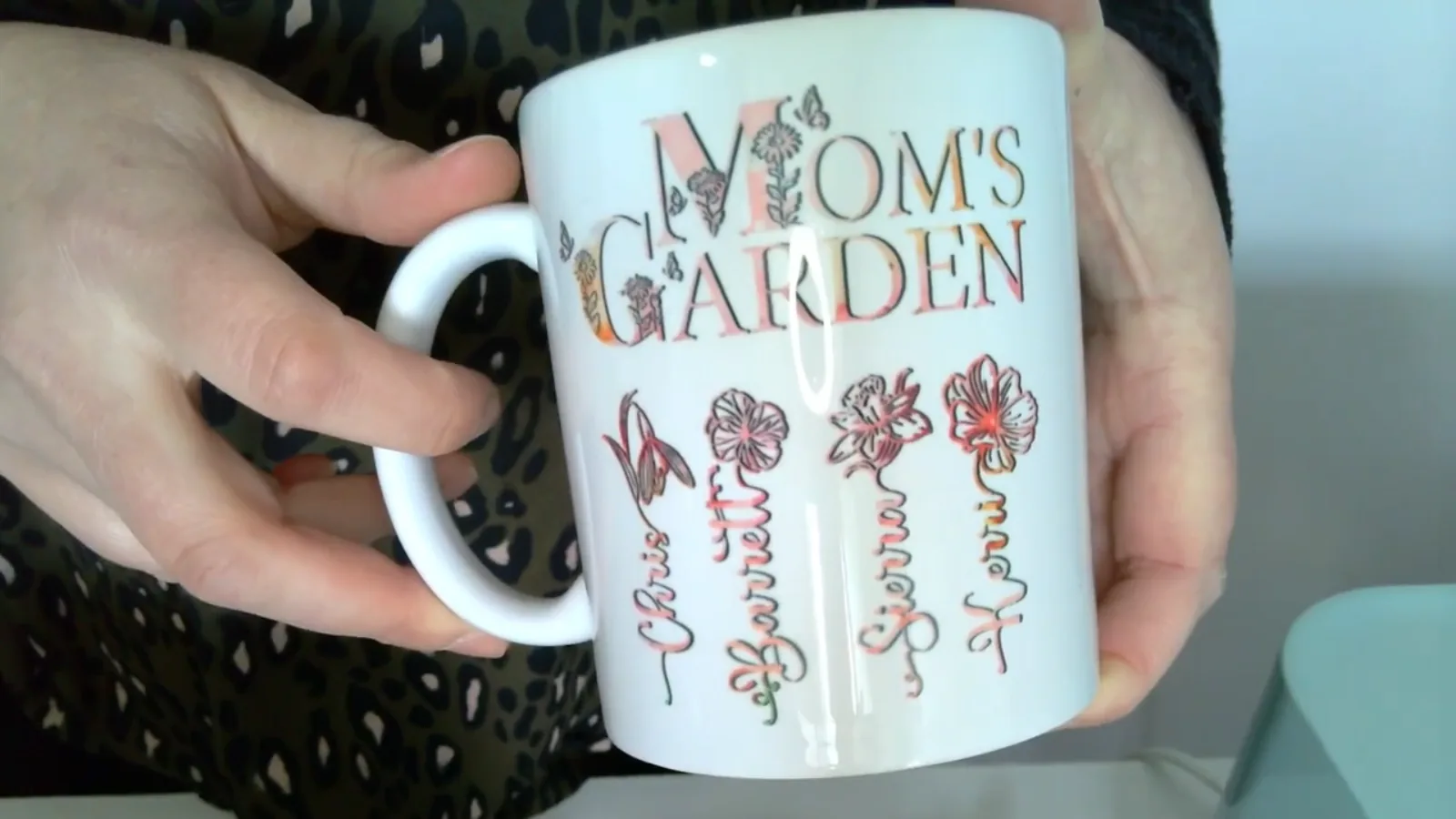
Buy 11 oz. I pressed a 15 oz stoneware mug that only just fit my press. It came out fine, but a squeeze is where problems start, and the 11 oz blanks fit with room to spare and press more evenly because of it.
That said, 15 oz has its place if your press has the room, and inner-colour mugs, where the inside and handle are a contrasting colour, photograph far better in a listing than plain white for pennies more.
The settings depend on the blank, not just the machine. On 11 oz ceramic with my tumbler press I run 390°F for 210 seconds. On 15 oz coated mugs with a different press I have run 400°F for 170 seconds and had excellent results. Both are right for what they were pressing. Always start from the guide that came with your blanks, then adjust.
My full walkthrough with photos of every step is in how to sublimate a mug.
What I use: HTVRont 11 oz blanks for everyday work, 11 oz ceramic in bulk cases when I am making a batch, 15 oz stoneware when the design needs the room, and 15 oz inner colour mugs when I want them to look expensive.
Tumblers
Tumblers carry a much higher perceived value than mugs, which means better margins, but they are less forgiving.

The design wraps the whole blank, so sizing has to be right or you get a visible gap or overlap at the seam. A tumbler press makes this dramatically easier than trying to manage a wrap in a flat press.
Straight tumblers are easier than tapered ones. A straight 20 oz skinny takes a rectangular design. A tapered one needs a curved template or the design distorts.
Check what you are buying, too. Some tumblers arrive shrink wrapped, and that film has to come off before pressing. It is obvious once you know and invisible when you are rushing.
What I use: 20 oz stainless straight skinny blanks and skinny tumblers in bulk with lids.
My guide to designing custom photo tumblers covers the sizing and wrap process properly.
Shirts and Apparel
Apparel is where the polyester rule bites hardest.
100% polyester gives you bright, saturated, permanent colour. It is the safe choice and what I reach for when a design needs to pop.
Poly-cotton blends around 65/35 give a softer, slightly washed-out look. Plenty of people prefer it, and it is genuinely more comfortable to wear. Just know that is what you are choosing.
100% cotton does not work. Sublimation ink has nothing to bond with, and it fades and washes out. But you are not stuck. Print onto DTF transfer film, cure hot melt powder onto it, and press that instead, and cotton works with the sublimation printer you already own. I walk through the whole method in sublimation on cotton. For the proper version of that, with a real printer and white ink, see printing direct to film.

Coasters
Coasters are quietly one of the best blanks to sell. They are small, they ship cheaply, they press in minutes, and people buy them in sets.
There are two kinds, and the difference matters more than the price does.
Hard-surface coasters have a glossy finish and hold fine detail. If you are printing a pet photo, a wedding photo, or anything where sharpness is the point, buy hard.
Fabric coasters have a softer, more muted result. They look lovely with text, monograms and logos, and they undersell a detailed photograph.
Pet photo coasters are the version I keep coming back to. People will pay for a good photo of their dog on something they use every day, and the cost per unit is low enough that a set of four still leaves a healthy margin.
What I use: 4 inch square fabric coasters for text designs, photo slate square coasters when I want detail, and slate coasters for a heavier, more premium feel.

Wood Photo Blocks
This is the blank most people have never tried, and it has the best margin of anything in this list.
Here is the part that surprises everyone: you do not sublimate the wood. The blank comes as a coated metal plate plus a wood block. You press the metal, let it cool, then glue it to the wood with E6000. The metal is what holds the image, and it holds it beautifully, which is why photo detail on these is so much sharper than you would expect from something that looks like a wooden ornament.
They photograph well, they feel substantial in the hand, and wedding, baby and pet photos all suit them.
The one thing to get right is the glue. E6000 needs proper ventilation and real curing time. Rushing it is how you end up with a plate that slides.

What I use: white coated wood heart blocks.
Ornaments
Ornaments are the definition of a craft fair blank. Cheap, seasonal, quick, and people buy several.

Most sublimation ornament blanks are double sided, which is a bonus and a trap. You get two surfaces to sell, but you have to align both, and a design that is 2 mm out on the back is obvious when it spins.
Aluminium and hardboard ornaments take detail better than fabric versions. Ceramic ones feel more premium and cost more to ship because they break.
What I use: HTVRont sublimation ornament blanks.
My tutorial on 3D sublimation ornaments covers the technique that makes them look raised off the surface.
Pillowcases
Pillowcases make a bigger visual impact than almost anything else on this list. A floral family-name design on a linen-look cover looks like a boutique product.
The catch is shipping. A finished pillow is bulky and light, which is the worst combination for postage.
So sell the cover, not the pillow. Covers fold flat and ship cheaply. Keep complete pillows for local pickup and craft fairs where the customer carries it home.

What I use: linen pillowcases for sublimation at around 16 by 16 inches.
Novelty and Sports Blanks
This is where you separate yourself from everyone selling the same mug.
Mini basketball hoops are my favourite example. Nobody expects them, they are perfect for a team photo or a senior night gift, and there is almost no competition on them locally. The same logic applies to flip flops, luggage tags, bag charms and anything else that photographs as a gift rather than as a printed object.
Novelty blanks cost more per unit and sell for a lot more than the difference.
What I use: Unisub mini basketball hoop blanks.

Where I Buy Sublimation Blanks
Johnson Plastics Plus is where I get most of my specialist blanks now, and honestly it is not really about the blanks themselves. It is what they put on the product page.
Scroll down any JPPlus listing to the Tech Docs and Downloads tab and you get two things nobody else bothers to give you.
Tech Tips with suggested settings. A PDF, specific to that exact blank, telling you the time, temperature and pressure the manufacturer recommends. Not a generic chart for “ceramic” but the settings for the mug you are actually holding. That alone removes most of the guesswork that ruins your first few attempts.
Downloadable design templates. The same product page gives you the blank's print area as a ready-made file, usually in several formats so it drops straight into Canva, Design Space, Illustrator or Photoshop. You build your design to the template, print it, and the sizing is right the first time. No measuring the blank with a ruler, no printing a test sheet to check placement, no design that sits 4 mm too high.
Between those two things, I stopped wasting blanks on sizing mistakes almost completely, and it is the main reason I keep going back.
They also run a rewards programme called JPP Bucks that quietly takes the sting out of restocking.


Amazon is fine for the commodity items. Mugs, ornaments, basic tumblers. Buy from a brand that says sublimation, read the recent reviews, and order one first.
Michaels and craft stores are useful when you need something today, at a price that reflects that.
If you are still setting up the printer side of things, my guides to converting an Epson EcoTank and fixing a clogged EcoTank will save you money before you spend any of it on blanks.
What I Would Skip
Anything that does not say sublimation. “Glossy white”, “printable” and “coated” are not the same thing.
Coating sprays. They work in the sense that something transfers. They also leave a shiny patch with a visible edge, and on fabric they change the hand feel completely. For cotton, the DTF powder method is far better.
Dark blanks. Until you have made peace with the fact that white ink does not exist in sublimation, dark blanks will only disappoint you.
Bulk buying anything untested. A case of thirty-six is only a bargain if the blank works.
Cheap marketplace drinkware with no brand. This is where my flask came from. The photos are always excellent.
Frequently Asked Questions
What are sublimation blanks?
They are products manufactured with a polyester or polymer coating so sublimation ink can bond into the surface. Mugs, tumblers, coasters, ornaments, shirts and photo panels are all available as blanks. Without that coating the design will not stick.
Can you use regular mugs for sublimation?
No. A mug from your cupboard has no polymer coating, so the ink has nothing to bond with and the design rubs off. It has to be a sublimation blank.
What is the best sublimation blank for beginners?
An 11 oz ceramic mug. It is cheap, it fits every mug press, it presses in under four minutes, and mistakes cost pennies rather than pounds.
Do sublimation blanks have to be white?
Not strictly, but they need to be light. Sublimation printers do not print white ink, so the colour of the blank shows through everywhere your design is white or pale. White gives you the truest colour.
How can you tell if a blank is sublimation ready?
Check that the listing uses the word sublimation, buy one before you buy a case, and press a test. If the design wipes off with your thumb, there was no coating.
Where is the cheapest place to buy sublimation blanks?
Marketplaces are cheapest per unit, specialist suppliers are cheapest per usable unit once you account for failures and the time you lose to them. For anything you plan to sell, I buy from a specialist supplier.
Can you sublimate on cotton?
Not directly. Sublimation ink bonds to polyester. You can get there by printing onto DTF transfer film, curing hot melt powder onto it and pressing that instead, which works on 100% cotton with a normal sublimation printer.
How much can you sell sublimation products for?
It varies hugely by blank. Coasters and ornaments are low cost and sell in sets, while wood photo blocks and novelty blanks carry the best margins because there is far less competition on them. My guide to selling sublimation crafts goes into pricing properly.
Final Recommendation
If you buy nothing else, buy 11 oz mugs and hard-surface coasters. They are cheap to learn on, they fit every press, and they sell reliably at every craft fair I have ever done.
Once your settings are dialled in, add wood photo blocks and one novelty blank. That is where the margin is, and it is where you stop competing with everyone else selling the same white mug.
And whatever you buy, buy one first.